


Table of Contents
- What Makes High Quality Denim Brands for Everyday Wear Worth It
- Quick Comparison: Five Everyday Denim Picks
- Best Everyday Jeans: Our Top Five Picks Reviewed
- How to Tell If Jeans Are Good Quality: 6 Checks Before You Buy
- Best Jeans for Everyday Wear on a Budget: Cost Per Wear Matters
- How to Care for Denim So It Lasts Longer
- Which Pair Should You Pick?
- Frequently Asked Questions
Last Updated: October 9, 2026
What Makes High Quality Denim Brands for Everyday Wear Worth It
High quality denim brands for everyday wear are worth it because they survive hundreds of wears, hold their shape through repeated washing, and cost less per wear than fast-fashion pairs that fall apart in a season. At Swank Boutique, we hear the same question constantly: why pay more for jeans? The answer sits in the fabric.
A good everyday pair starts with cotton content above 90%, a fabric weight heavy enough to hold structure, and seams that don't twist after a month. The CottonWorks fabric guide explains how cotton percentage drives durability and breathability in denim. Rigid denim breaks in and molds to your body. Stretch denim moves with you but can bag out at the knees over time.
Below, we break down five pairs we carry, what each one does best, and how to judge quality before you spend a dollar.
Quick Comparison: Five Everyday Denim Picks
Here's the short version. Every pair below comes from our floor, priced between $35 and $85, and built for regular rotation rather than one-off occasions.
| Style | Price | Fabric | Best For |
|---|---|---|---|
| Better Butter Jean | $74.00 | Stretch denim, 30" inseam | All-day comfort, wide-leg fans |
| Oaklee Petite Wide Leg Jean | $69.00 | 54% cotton, 24% rayon, 20% polyester, 2% spandex | Petite frames needing tailored fit |
| Aster White Jeans | $85.00 | 92% cotton, 6% polyester, 2% spandex | Year-round white denim |
| High Rise 90s Boyfriend Jean | $47.50 | 100% cotton | Rigid denim lovers, vintage look |
| 90's Straight Jeans | $35.00 | 93% cotton, 6% polyester, 1% spandex | Budget wardrobe staple |
Best Everyday Jeans: Our Top Five Picks Reviewed
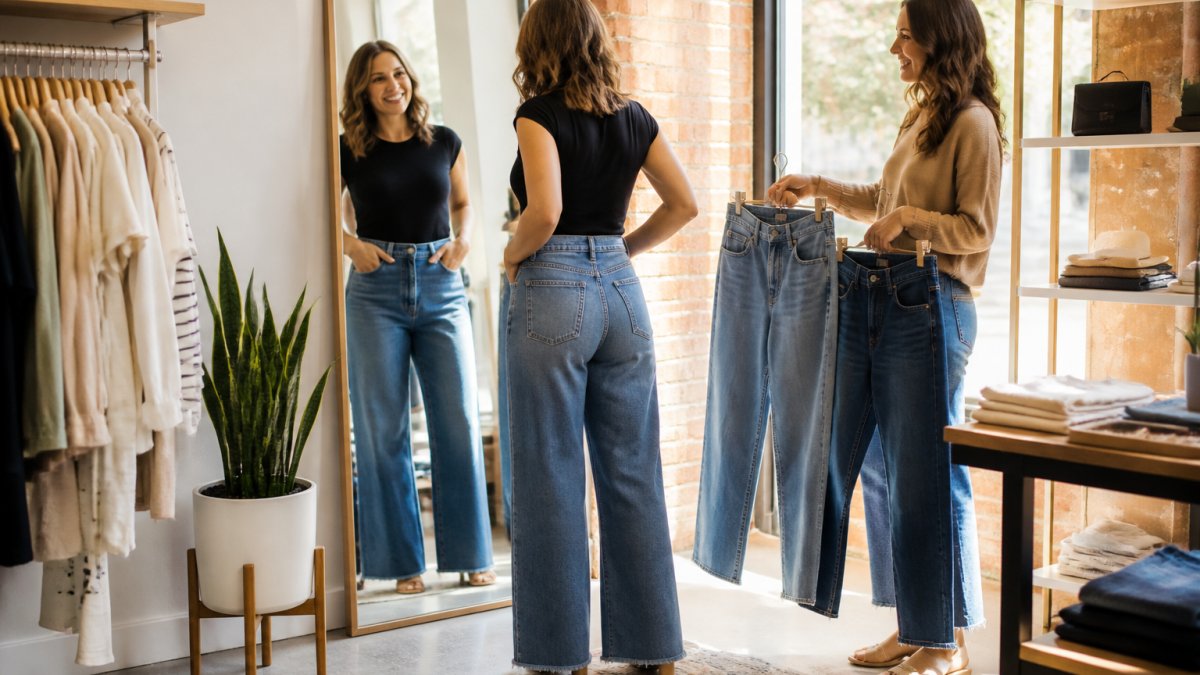
Every pair we stock gets judged on the same criteria: fabric content, fit range, construction details, and how well it holds up after repeated washing. Here's how our five favorites stack up.

Better Butter Jean: Soft Stretch for All-Day Comfort
The Better Butter Jean is our top pick for anyone who lives in denim. The high-rise, wide-leg cut with a 30" inseam gives you room to move without the waistband shifting. Stretch denim keeps its shape through long days, and the elevated waistband stays put whether you're sitting at a desk or chasing kids.
Pair it with sneakers or heels. It handles both.
Oaklee Petite Wide Leg Jean: Tailored Fit for Petite Frames
Petite shoppers get overlooked by most denim brands. The Oaklee fixes that with a slim, wide-leg silhouette cut to flatter shorter frames. The double stacked waistband adds a modern edge and keeps the fit secure.
Fabric breakdown: 54% cotton, 24% rayon, 20% polyester, 2% spandex. That blend gives you softness and stretch without losing structure.
Aster White Jeans: Clean White Denim That Works Year-Round
White denim intimidates people. It shouldn't. The Aster White Jeans use 92% cotton with comfort stretch, a raw hem, and a cropped wide leg in optic white. The 10" rise and 26.5" inseam hit right for most heights.
Wear them in summer with sandals, in winter with boots and a chunky sweater. One pair, four seasons.
High Rise 90s Boyfriend Jean: Rigid Denim With Vintage Character
If you want denim that breaks in and tells a story, this is it. Made from 100% cotton with distressed details and a high rise, the High Rise 90s Boyfriend Jean delivers that worn-in vintage feel. Rigid denim takes a few wears to soften, but once it does, it molds to your body.
Expect minimal stretch. That's the point.
90's Straight Jeans: The Budget-Friendly Wardrobe Staple
At $35, the 90's Straight Jeans prove you don't need to spend big for quality. The 90's straight fit with a high-rise waist, hidden zipper, and front button closure works with everything already in your closet. Fabric: 93% cotton, 6% polyester, 1% spandex.
Machine wash cold, tumble dry low. Simple care for a pair you'll reach for daily.
How to Tell If Jeans Are Good Quality: 6 Checks Before You Buy
Knowing how to tell if jeans are good quality takes about 60 seconds once you know where to look. Run these six checks before you commit.
- Check the cotton content. Look for 90% or higher for durability. Lower percentages mean more synthetic fiber and faster breakdown. The Aster White Jeans (92% cotton) and 90's Straight Jeans (93% cotton) clear this bar; the Oaklee Petite Wide Leg Jean (54% cotton) trades some cotton for rayon and polyester softness, which is a deliberate comfort-over-abrasion-resistance choice, not a defect.
- Feel the fabric weight. Denim is sold by weight in ounces per square yard. If a tag does not list weight, pinch the fabric, if you can read a shadow through it, it is on the light side.
- Inspect the stitching. Look for tight, even seams with no loose threads.
- Test the hardware. Zippers should glide. Buttons should feel solid, not hollow.
- Check the rise and inseam. A proper fit at the waist and hem means you'll actually wear them. Measure a pair you already love, then match the rise and inseam to that number instead of guessing from a size label.
- Look at the wash.
The seventh check nobody runs: cost per wear. Divide the price by the number of wears you realistically expect. A $35 pair that survives 20 wears costs $1.75 per wear. A $74 pair that survives 200 wears costs $0.37 per wear.

On shrinkage: If a pair fits perfectly off the rack and you plan to machine dry it hot, size up or plan to air dry.
Best Jeans for Everyday Wear on a Budget: Cost Per Wear Matters
The best jeans for everyday wear on a budget aren't the cheapest pair on the rack. They're the pair that costs the least every time you put them on.
Do the math. A $35 pair you wear twice before the seams split costs $17.50 per wear. A $74 pair you wear 100 times costs $0.74 per wear. That's the real comparison.
Our 90's Straight Jeans at $35 deliver strong value because the 93% cotton blend holds up. The Better Butter Jean at $74 costs more upfront but earns its price across years of rotation. Budget shopping isn't about the lowest tag. It's about the lowest cost per wear.
How to Care for Denim So It Lasts Longer
Caring for denim properly can double its lifespan.
The wash routine that actually preserves denim:
- Wash cold, inside out, on a gentle cycle
- Skip the dryer when you can; air dry to prevent shrinkage
- Wash every 3-5 wears, not after every wear
- Use mild detergent, no bleach
- Spot clean between washes to extend time between full cycles
- Hang or fold flat; never wring wet denim
Why cold water matters more than people realize. Hot water and high dryer heat break down spandex fibers fast. That is why stretch jeans start sagging at the knees after a few months, the elastic core of the yarn fatigues, and the fabric stops snapping back. Cold water and air drying prevent it. Rigid denim like the High Rise 90s Boyfriend Jean has no spandex to lose, so it benefits most from air drying for a different reason: heat accelerates cotton shrinkage and speeds up indigo loss.

Shrinkage, in real numbers. If you love the fit off the rack and plan to machine dry, either size up or commit to air drying.
Fading is a feature, not a bug, if you control it. Indigo sits on the surface of the cotton fiber, not inside it, so it rubs off with wear. That is how you get whiskers at the hips and honeycombs behind the knees. To slow fading, wash inside out and cold. To speed it up deliberately, wear the pair hard before the first wash and let the creases set.
Repairs that extend life by years.
Which Pair Should You Pick?
Start with how you'll wear them. If comfort drives every decision, the Better Butter Jean at $74 gives you stretch, a 30" inseam, and a wide-leg cut that works from morning to night. Petite shoppers should go straight to the Oaklee at $69. Want white denim you can wear year-round? The Aster at $85 handles it. Rigid denim fans get the 100% cotton High Rise 90s Boyfriend Jean at $47.50. And if budget rules, the 90's Straight Jeans at $35 deliver quality without the spend.
Frequently Asked Questions
What are good everyday jeans?
Good everyday jeans balance comfort, durability, and versatility. Look for a fabric blend with at least 90% cotton for breathability, a rise that stays put when you sit and move, and a wash that pairs with most of your wardrobe. The Better Butter Jean at $74 and the 90's Straight Jeans at $35 both fit that brief, one with stretch denim for softness and one with a classic straight leg that works with sneakers or heels.
How can you tell if denim is good quality?
Check the fabric content first. Then inspect the stitching at stress points like the crotch and belt loops, look for clean seams without loose threads, and feel the hardware. A hidden zipper and secure front button closure, like the ones on the 90's Straight Jeans, signal careful construction.
What type of denim is most comfortable for daily wear?
Stretch denim blends with a small amount of spandex or elastane tend to be the most comfortable for daily wear because they move with you. The Aster White Jeans use 92% cotton, 6% polyester, and 2% spandex for comfort stretch, while the Better Butter Jean is built specifically as soft, stretchy denim. If you prefer a more structured feel, rigid 100% cotton denim like the High Rise 90s Boyfriend Jean offers a classic look but needs a break-in period.
How do you make jeans last longer?
Wash jeans inside out in cold water and skip the dryer when you can. The 90's Straight Jeans care label recommends machine wash cold, no bleach, tumble dry low, and a cool iron. Wash less often than you think you need to, spot-clean between wears, and let jeans air dry to protect the fabric weight, color, and fit. Rotating two or three pairs also reduces wear on any single pair.
How should everyday jeans fit?
Everyday jeans should feel snug at the waist without digging in, sit flat against your lower back when you bend, and allow a full range of motion. The rise matters too: a high rise keeps everything in place and works well for most body types. Inseam length should hit where you want it, whether that is a 30-inch inseam for a relaxed drape or a 26.5-inch cropped length like the Aster White Jeans. If you are between sizes, size up for stretch denim and stay true to size for rigid cotton.
Finding denim that fits your body, your budget, and your daily routine shouldn't require guesswork. At Swank Boutique, our stylists help you find the right pair in person, with sizes across body types and a welcoming floor where nobody feels out of place. Stop by our University Place shop to try on all five picks, or explore our full denim collection online and choose your options.