


Table of Contents
- Start With the Label: Reading Fabric Composition and Fiber Content
- Fabric Weight, Thickness, and Opacity: Hold It Up to the Light
- Feel the Fabric: Softness, Drape, and Texture
- Signs of Well-Made Clothing: Stitching, Seams, and Hem Finishing
- Fit, Shape Retention, and the Wrinkle Test
- Your Clothing Quality Checklist for Boutique Shopping
- How to Care for Boutique Clothing So It Lasts
- Quality vs. Price: Cost Per Wear and Online Boutique Checks
- Frequently Asked Questions
Last Updated: October 13, 2026
Start With the Label: Reading Fabric Composition and Fiber Content
Spotting quality boutique clothing starts with one small tag. The label predicts how a piece will wear, wash, and last. We tell shoppers to flip the tag before falling in love with the fit.
Fabric composition is the mix of fibers; fiber content is the exact percentage of each. "95% cotton, 5% spandex" tells you far more than "soft blend."
Fiber Content That Lasts
Natural fibers like cotton, linen, wool, and silk breathe well and age gracefully. Synthetics like polyester and rayon add stretch and lower the price. Neither is bad, the problem is a label that hides the mix.
Look for clear percentages, not vague words like "premium blend." A garment that lists every fiber is usually made by a brand with nothing to hide.
What the Garment Label Actually Tells You
Beyond fiber, the label carries care instructions, country of origin, and sometimes a style number. If it says dry clean only, factor that cost in.
Fabric Weight, Thickness, and Opacity: Hold It Up to the Light
Hold the garment up to the light. If you can see your hand clearly through it, the fabric is thin.
Fabric weight describes how heavy a material feels per square yard. Heavier fabrics drape better and hide more; lighter ones feel cooler but show every line.
Try this quick test:
- Hold the piece against a window or bright lamp
- Check the back panel, not just the front
- Squeeze a fold and see if it springs back
- Compare two similar pieces side by side
Sheerness is not always a flaw. A summer blouse can be intentionally light.
Feel the Fabric: Softness, Drape, and Texture
Run the fabric between your fingers.
Drape is how a fabric falls when you hold it up. Good drape moves with your body instead of standing away from it.
Texture matters too. Rub the fabric gently to check for pilling.
A common mistake is judging softness alone. Plenty of fabrics feel wonderful in the store and fall apart after three washes.
Signs of Well-Made Clothing: Stitching, Seams, and Hem Finishing
Turn the garment inside out. This is where the truth lives. Garment construction shows up in the stitching, seams, and finishing, and those details separate a piece that lasts from one that disappoints.
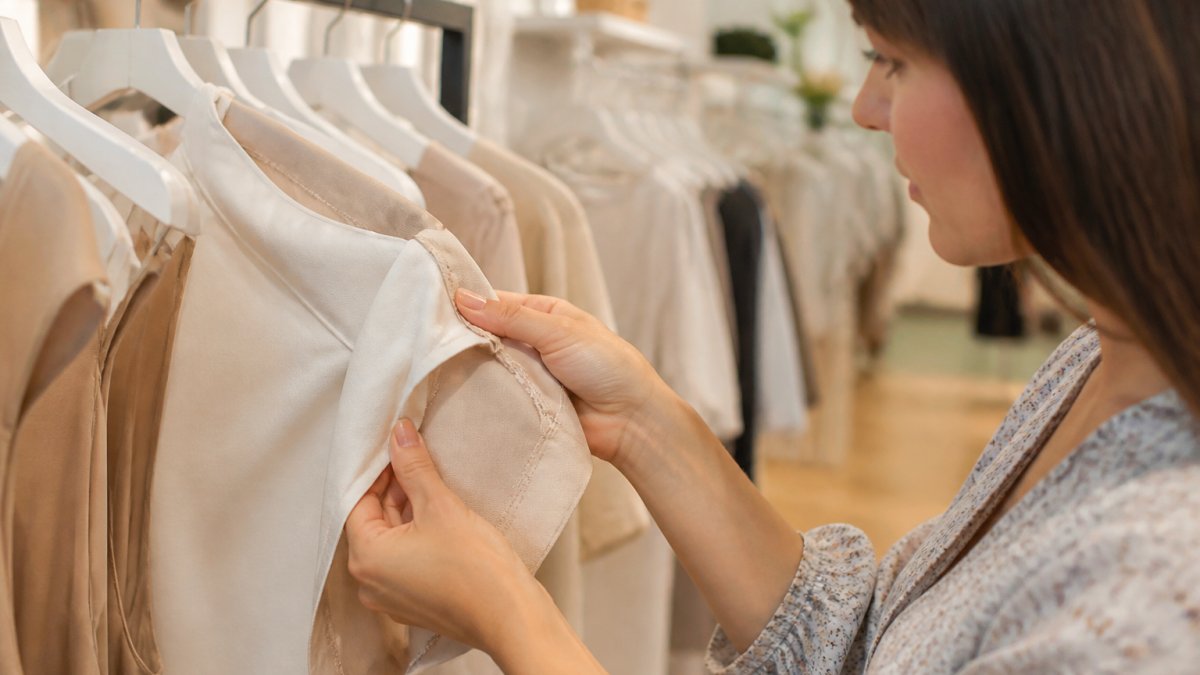
Stitch Density and Seam Type
Run your thumb along the inside seam. A quality seam feels flat and dense, not lumpy.
Check the seam allowance, the extra fabric beyond the stitch line.
Look for french seams or bound seams on unlined pieces, they enclose the raw edge so it won't fray. A raw, unfinished edge inside a garment is a quiet durability problem.
Hems, Twisting, and the Roll Test
A clean hem sits flat with no twisting. Lay the garment on a table and check the hem line is straight. Cheap hems pucker or roll after one wash, usually because the fabric wasn't stabilized before stitching.
On knits, look for a coverstitch (the double row of stitching you see on t-shirt hems). A single straight stitch on a stretchy knit will pop the first time you pull it over your head.
Collar, Cuffs, and Neckline Details
The collar, cuffs, and neckline take the most wear. Pull gently on each, they should hold their shape, not stretch out. On a button-down, check for a collar stay or fused interlining; on a knit, the neckline should have a ribbed band or binding, not a raw edge.
Pattern matching matters too. On a striped or plaid shirt, the pattern should line up at the shoulder seam and center front placket. When it doesn't, the maker cut corners to save fabric.
Prints, Pattern Alignment, and Color Consistency
Hold the garment under good light. Check that the print looks the same across every panel. Color consistency should hold from sleeve to body. Faded patches or mismatched dye lots mean poor quality control.
Boutique Red Flags to Check Before You Buy
Even a well-curated boutique can carry a dud. Run this quick list before you commit:
- Loose threads at the shoulder, armhole, or waistband
- Uneven seams where one side is wider than the other
- Weak closures, buttons that wobble, zippers that catch, hooks that bend
- Inconsistent sizing across the same brand (a medium that fits like a small)
- Puckering along a seam, which means the fabric was stretched during sewing
- Twisted side seams that spiral around the body
A single red flag isn't always a dealbreaker. Two or three on the same garment usually are.
Fit, Shape Retention, and the Wrinkle Test
Squeeze a handful of fabric and release it. If deep creases stay behind, the piece will wrinkle badly.
Shape retention is how well a garment bounces back after wearing.
Shrinkage is another quiet problem. Natural fibers can shrink if the brand didn't pre-shrink them.
Fit is personal, but balance is not. A well-cut garment hangs evenly at the shoulders and hem.
Your Clothing Quality Checklist for Boutique Shopping
Use this checklist on every shopping trip. It takes about two minutes per piece.
| Check | What to Look For | Red Flag |
|---|---|---|
| Fiber content | Clear percentages on the label | "Blend" with no details |
| Fabric weight | Substantial feel, good drape | Papery or see-through |
| Opacity | Even coverage, lined if needed | Hand visible through fabric |
| Stitching | Straight, even lines | Loose threads, skipped stitches |
| Seams and hems | Flat, no twisting | Puckering or rolling |
| Collar and cuffs | Hold shape when pulled | Stretch out easily |
| Print and pattern | Aligned at seams | Mismatched panels |
| Wrinkle test | Springs back smooth | Deep creases remain |
How to Care for Boutique Clothing So It Lasts
Good care doubles the life of any garment. How to care for boutique clothing comes down to reading labels and understanding how each fiber behaves, protecting the cost-per-wear value you paid for.
Fiber-by-Fiber Care Basics
Different fibers fail in different ways. Match your care to the fiber, not just the label symbol.
- Cotton, Strong and washable, but shrinks with heat. Cold water and low dryer heat preserve the fit. Cotton also fades in direct sun, so dry it inside out.
- Linen, Gets softer with each wash but wrinkles easily. Wash cold, tumble dry low, and press while slightly damp. Never bleach it.
- Wool and merino, Naturally odor-resistant, so it needs washing far less often than you think. Hand wash or use a wool cycle in cold water, then dry flat. Heat and agitation cause felting and shrinkage.
- Silk, Delicate and prone to water spots. Hand wash in cool water with a gentle detergent, or dry clean. Never wring it out.
- Cashmere, Soft but pills with friction. Wash cold, dry flat, and use a fabric shaver or sweater comb to remove pills rather than pulling them off.
- Polyester and nylon, Durable and quick-drying, but hold onto odors and oils. Wash warm, and avoid high heat, which can melt or glaze the surface.
Why Pilling and Fading Happen
Pilling and fading usually come from heat and friction, not the fabric itself. Pilling happens when short fibers work loose and tangle into balls, most often on looser-spun yarns and areas that rub, underarms, inner thighs, bag straps.
Cold water and air drying prevent both. Wash less often than you think. Most garments don't need a wash after every wear, airing them out overnight is often enough.
Habits That Extend the Life of a Garment
- Wash in cold water to protect color and fiber
- Turn prints and embellishments inside out
- Skip the dryer when you can; air dry knits flat
- Use a mesh bag for delicates
- Store knits folded, not hung, so they don't stretch at the shoulders
- Use a lingerie bag for anything with hooks, zippers, or beading
- Rotate your wardrobe so pieces rest between wears
For specific fiber guidance, the Federal Trade Commission's care labeling guidance explains what those label symbols actually mean.
Care and Cost Per Wear
Care habits directly affect cost per wear. A $120 wool sweater worn 40 times a season for three seasons costs about $1 per wear, but only if it doesn't felt, pill, or lose its shape.
Our Alexa Crochet Skirt is a good example. The open-weave design needs gentle handling, and the lining protects the crochet from stretching.

Quality vs. Price: Cost Per Wear and Online Boutique Checks
Cost per wear is the real price of a garment. Divide the price by how many times you'll actually wear it.
This is where budget-minded shoppers win. Our Pearl Embellished Barrel Jeans sit at $65, and the pearl detailing and sturdy denim mean they earn their place in your closet, unlike fast fashion denim that loses its shape in a month.

Shopping online adds a wrinkle. You can't feel the fabric through a screen, so ask questions before you buy:
- Request the exact fiber content
- Ask for a photo of the inside seam
- Check the return policy
- Read reviews that mention fit and wash results
A boutique that answers these questions quickly is usually a boutique that stands behind its pieces. The Better Business Bureau's online shopping guidance covers the basics of buying safely from small retailers.
For men's pieces, fiber quality matters just as much. Our Cashmere Quarter Zip Sweater is made from 100% fine merino wool, breathable, durable, and soft enough to wear all season.

Spotting quality takes practice, and it's harder online or in front of a crowded rack. That's the challenge Swank Boutique solves in person.
Frequently Asked Questions
How can I tell if clothing will hold up after washing?
Check the garment label for fiber content and wash care instructions before buying. Natural fibers like cotton and merino wool tend to hold shape well when cared for properly. Look for reinforced seams, secure buttons, and quality stitching, since loose threads and uneven hems often signal construction that will break down after a few washes. A garment that feels substantial and holds its shape when stretched is a better bet than one that feels thin or recovers slowly.
What details should I inspect on quality boutique clothing?
Focus on five areas: fabric composition on the label, fabric weight and opacity, stitching and seam allowance, collar and cuff finishing, and pattern alignment at the seams. Hold the garment up to the light to check sheerness, feel the fabric for softness and drape, and gently tug a seam to see if it holds. These checks take under two minutes and tell you more about durability than the price tag does.
How do I find quality clothes at an affordable price?
Think in terms of cost per wear rather than sticker price. A $65 pair of well-constructed jeans worn twice a week for two years costs far less per wear than a $20 pair that pills after five washes. Boutiques that carry quality denim and knit sets at accessible prices, like Swank Boutique's Pearl Embellished Barrel Jeans at $65, give you construction you can inspect in person before you buy. Ask about fabric content and care, and compare stitching quality across pieces.
Can I check clothing quality when shopping online?
Yes, with a few workarounds. Zoom in on product photos to inspect stitching, hem finishing, and pattern alignment at the seams. Read the fabric composition and fiber content in the description. Check customer reviews for mentions of shrinkage, pilling, or fading after washing. When possible, visit a physical boutique to feel the fabric and try the fit in person, which removes most of the guesswork from buying quality boutique clothing online.