


Table of Contents
- What Permanent Jewelry Really Means
- How Long Does Permanent Jewelry Last?
- How to Remove Permanent Jewelry Safely
- Can You Get an MRI With Permanent Jewelry?
- Permanent Jewelry Pros and Cons
- What to Expect at a Permanent Jewelry Appointment
- Care, Repair, and Skin Sensitivity
- Frequently Asked Questions
Last Updated: October 18, 2026
What Permanent Jewelry Really Means
Permanent jewelry is a bracelet, necklace, or anklet that a jeweler welds directly onto your body, so it has no clasp and stays on until you choose to remove it. At Swank Boutique, we explain it to customers this way: the chain is fitted to you, then a small weld closes the loop forever. It is a fit-once piece, not a clasp-and-go piece.
That single weld is the whole difference. A clasp is a weak point. A welded link is not.
Why There Is No Clasp
No clasp means nothing to snag, loosen, or pop open. A jeweler sizes the chain on your wrist, cuts it, then fuses the two ends with a tiny welding tool. The join cools in seconds and becomes a solid link.
The trade-off is honest: you cannot take the piece off on a whim. You commit to wearing it, which is exactly the point for many people.
How Long Does Permanent Jewelry Last?
The honest answer is that permanent jewelry is clasp-free, not literally indestructible. Most welded pieces stay wearable for many months to several years, and some last longer with care. The weld itself is rarely the first thing to fail; the chain, the fit, and your daily habits usually determine how long the piece survives.
Why 'Permanent' Means Clasp-Free, Not Forever
A welded link is a solid connection, but it is still metal. Over time, any chain flexes, rubs against skin and clothing, and accumulates microscopic wear at its thinnest points. The weld joint is typically as strong as the surrounding links when done properly, so the piece does not have a built-in expiration date.
That fixed fit is the biggest factor in longevity. A chain that sits snugly and moves little tends to last longer than one that slides, twists, or catches throughout the day.
What Actually Shortens the Life of a Welded Piece
- Thin, lightweight chains wear through faster than sturdier ones because there is less metal to absorb repeated flexing
- Snagging on clothing, gym equipment, hair, or seatbelts concentrates stress at one link and can fatigue the weld over time
- Harsh chemicals like chlorine, bleach, and some cleaning products dull the metal and can accelerate corrosion on plated or lower-karat pieces
- Rough contact with weights, tools, abrasive surfaces, or repeated impact
- Poor fit that pulls, stretches, or constantly rotates the chain
- Body chemistry, some wearers find that sweat and skin oils tarnish certain metals faster than others
A common mistake is choosing the daintiest chain on the display. It looks lovely, but it is often the first to fail. If you are hard on your hands, gardening, lifting, working with tools, ask for a chain a step heavier than the one you first reach for.
How Material and Fit Affect Wear Duration
Solid gold and sterling silver chains generally outlast plated or filled versions because the precious metal runs through the entire link rather than sitting in a thin surface layer. Plated chains can look identical on day one but may show wear at high-friction points sooner. Fit matters just as much: a bracelet that hangs loosely and slides over the hand experiences more flexing at the weld than one that sits just above the wrist bone with a small amount of breathing room.
Realistic Expectations
Most wearers get months to years of continuous wear from a well-chosen piece. A fine chain worn daily will typically outlast a delicate one you catch on everything, and a sturdier chain on an ankle that sees less abrasion may outlast the same chain on a wrist that types, lifts, and reaches all day. If you want the longest possible lifespan, choose a mid-weight chain in a solid metal, get a fit that leaves a little room for swelling, and treat the piece like jewelry rather than armor.
How to Remove Permanent Jewelry Safely
Removal is simple, and it does not mean cutting the piece off in a panic. A jeweler uses small wire cutters to snip one link, usually at the weld. The piece comes off cleanly and can often be re-welded later.
Here is the safe way to do it:
- Go back to a jeweler who offers permanent jewelry service rather than cutting at home
- Ask them to snip the weld link, not a random spot on the chain
- Keep the piece so it can be re-welded if you want it back on
- Check the skin underneath for irritation before you re-weld
Do not use household scissors or pliers. You can nick your skin or damage the chain beyond repair. If you need it off in a hurry, a jeweler can usually handle it in minutes.
Can You Get an MRI With Permanent Jewelry?
Ask before your scan, and expect to remove the piece. MRI machines use strong magnets, and metal near the scanner is a real safety concern. Many imaging centers ask you to take off all jewelry beforehand, and a welded bracelet is no exception.
The FDA safety information on MRI explains that metal objects can heat up or move near the magnet. Call the imaging center ahead of time and ask their policy. If they need it off, a jeweler can snip it, and you can re-weld it afterward.
Other Medical Situations to Plan For
MRI is the most common concern, but it is not the only one. Tell your care team you are wearing permanent jewelry before surgery, certain dental procedures, and any scan or treatment that involves strong magnets or electrical current. Some surgical teams ask patients to remove all jewelry to reduce infection risk and avoid interference with equipment. If removal is required, arrange a jeweler visit before the procedure rather than cutting the piece at home.
Workplace, Sports, and Airport Screening
- Workplace rules: Some employers, especially in food service, healthcare, manufacturing, and laboratory settings, restrict jewelry for safety or hygiene reasons. Check your employer's policy before your appointment; a welded piece cannot be slipped off at the start of a shift.
- Sports: Contact sports and activities that involve gripping equipment can put stress on a welded chain. Some leagues and gyms have jewelry rules. If you play a sport where a snag or impact is likely, consider an ankle or a sturdier chain, or plan to remove the piece for the season.
- Airport screening: A small welded chain usually passes through standard screening without issue, but it can trigger additional screening at some checkpoints. Allow a few extra minutes and let the officer know the piece is welded on if asked.
Emergencies and Urgent Removal
In a true emergency, medical personnel can cut a chain off if needed. That is a last resort, not a routine removal method, and it may damage the piece beyond easy repair. For planned situations, surgery, a scan, a new job requirement, schedule a jeweler visit in advance so the piece can be snipped at the weld and re-welded later.
Permanent Jewelry Pros and Cons
The honest answer to whether permanent jewelry is worth it comes down to fit with your life. It is not for everyone, and that is fine.
Pros:
- No clasp to fiddle with or lose
- Fits your wrist exactly
- Feels personal and meaningful
- Great for gifts between mothers and daughters
Cons:
- Cannot be removed at home without cutting
- Needs a jeweler for removal or repair
- Not ideal for some medical scans
- Style is locked in until you remove it
The Downsides Nobody Mentions at the Appointment
The appointment is fun, and the sparkle is real. But a few practical points rarely come up.
- Airport security can be a hassle if the piece sets off a scanner
- Tight-fitting pieces get uncomfortable in heat or swelling
- Style changes mean a re-weld or a new piece
- Repairs usually require a return visit
None of these are dealbreakers. They are just worth knowing before you commit.
What to Expect at a Permanent Jewelry Appointment
An appointment usually takes 15 to 30 minutes, start to finish. You pick a chain, get fitted, and watch the weld happen on the spot. Most people walk out wearing the piece.
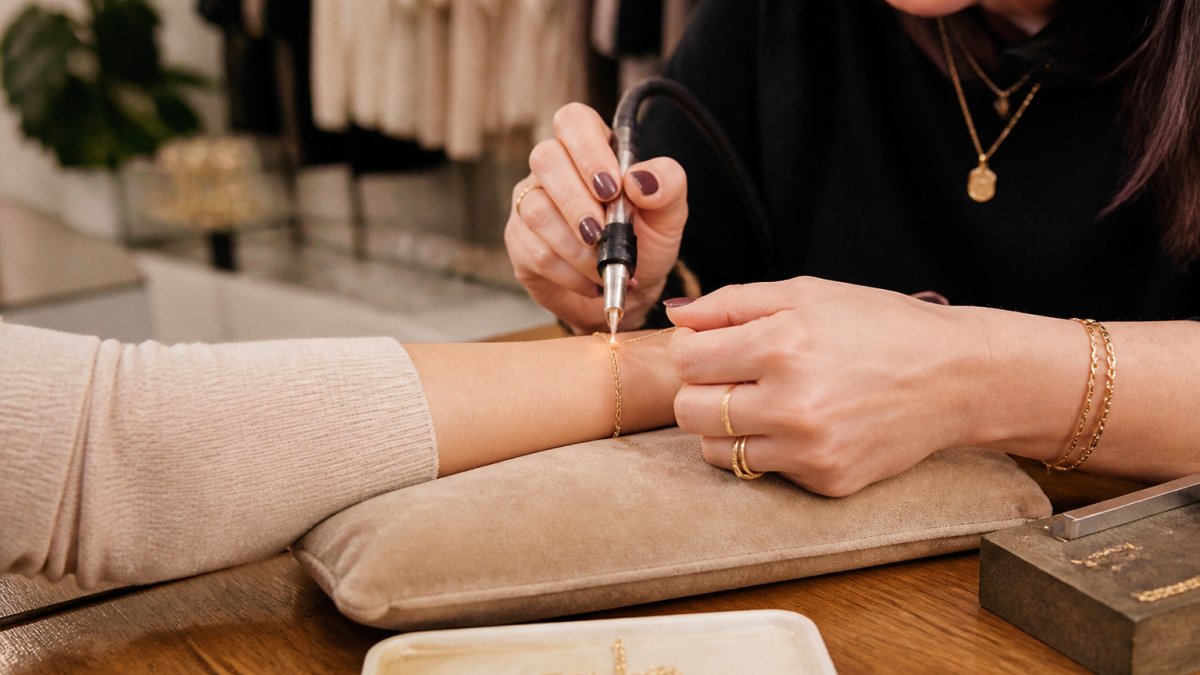
The process looks like this:
- Choose your chain from the available styles and metals
- Get measured so the fit is right for your wrist or ankle
- Watch the weld as the jeweler fuses the ends together
- Check the finish and make sure it feels comfortable
- Book a follow-up if you ever need a repair or removal
At Swank Boutique, our team walks you through each step and helps you pick a chain that suits your style and daily routine. Customers often tell us the appointment felt relaxed, not rushed.
Care, Repair, and Skin Sensitivity
Care is mostly about keeping the piece clean and dry. Wipe it with a soft cloth, avoid harsh cleaners, and rinse off sweat after workouts. Skip chlorine when you can.
Skin sensitivity matters when you choose your metal. Look for pieces labeled sensitive-skin friendly, like our nickel allergy guidance from the CDC notes, nickel is a common trigger.
For repairs, most welds can be fixed or redone. Bring the piece back and let a jeweler look at it rather than trying to fix it yourself.
If you want a removable option, we carry pieces like our Gold Nail Bracelet with a secure hinge, so you get the look without the commitment.

Frequently Asked Questions
How long does permanent jewelry actually last?
Most welded chains stay on for months to years, and many wearers keep one on for over a year. Longevity depends on the chain material, thickness, and how much stress the piece takes. Thinner chains on an active wrist can stretch or snap within a few months, while a slightly heavier chain worn on the ankle often lasts far longer. Daily habits like gym sessions, heavy lifting, and tight sleeves all shorten the lifespan. Plan on checking the welded link every few months for thinning or fraying.
Can permanent jewelry be removed without damaging it?
Yes. Removal is quick. Jewelers can snip the welded link with small jewelry cutters, and the chain can often be re-welded later if you want it back on. If you remove it yourself, cut at the welded jump ring rather than a decorative link so a jeweler can repair it cleanly. Keep the piece in a small bag and bring it in for a re-weld when you are ready to wear it again.
Can you get an MRI with permanent jewelry?
You should remove permanent jewelry before an MRI. MRI machines use strong magnets that can pull on ferrous metal, and even non-magnetic gold or silver can heat up or create image artifacts. Radiology staff will usually ask you to take off all jewelry, including welded bracelets and necklaces. Because permanent jewelry has no clasp, you may need to arrange for removal before your scan. Re-welding afterward is a quick fix at many boutiques.
What are the downsides of permanent jewelry?
The main downsides are limited flexibility and repair hassle. You cannot swap the piece to match an outfit, and if it breaks or gets caught on something you need a jeweler to re-weld it. Some wearers find the chain irritating during sleep or notice skin sensitivity to certain metals, especially nickel-heavy alloys. Airport security is rarely an issue since TSA does not require removing fine jewelry, but medical imaging and some sports do require removal. Weigh those trade-offs against the low-maintenance appeal before committing.
Permanent jewelry asks you to commit to a piece you will wear every day, and that is exactly why some people love it and others do not. If you want a fit-once piece that feels personal, our team at Swank Boutique can help you choose a chain and walk you through the weld. We offer permanent jewelry service alongside our curated styles, personal stylists on request, and a welcoming in-store atmosphere. Choose options that fit your life, and get started with Swank Boutique today.