


Table of Contents
- The Real Difference: Local Boutique vs Online Shopping
- 7 Benefits of Shopping in Person at a Boutique
- How to Shop Local on a Budget Without Settling
- Why Unique Clothing Boutiques Beat a Search Bar
- The True Cost Comparison: Shipping, Returns, and Time
- How to Find and Evaluate a Local Boutique Near You
- Inclusive Shopping: Sizes, Access, and Budgets That Fit
- Conclusion
- Frequently Asked Questions
Last Updated: October 20, 2026
The Real Difference: Local Boutique vs Online Shopping
The core difference between a local boutique and an online store isn't the inventory. It's who's standing in front of you when you decide.
Online retail gives you infinite selection and a checkout button. A boutique gives you a mirror, a second opinion, and a piece you can wear out the door. Neither option is wrong, but the reasons to choose in-person shopping are more practical than most people assume.
What You Get in Person That a Cart Can't Deliver
You get certainty. Try on a Kalina Peppercorn Top and know within seconds whether the loose V-neck fit works on your frame, rather than ordering two sizes and hoping.

You also get a person. A stylist can pull a second option while you're still in the fitting room. That's a service no filter can replicate.
Where Online Still Wins
Honesty matters here. Online shopping beats a physical store on raw selection, price comparison across dozens of sellers, and accessibility for anyone who can't easily leave home.
The catch is what you trade for that convenience: shipping windows, return labels, and the risk of a package that never arrives or arrives wrong.
7 Benefits of Shopping in Person at a Boutique
In-person shopping wins on fit, service, community, and time. Here are the seven advantages customers cite most often, with the mechanism behind each so you can judge whether it applies to you.
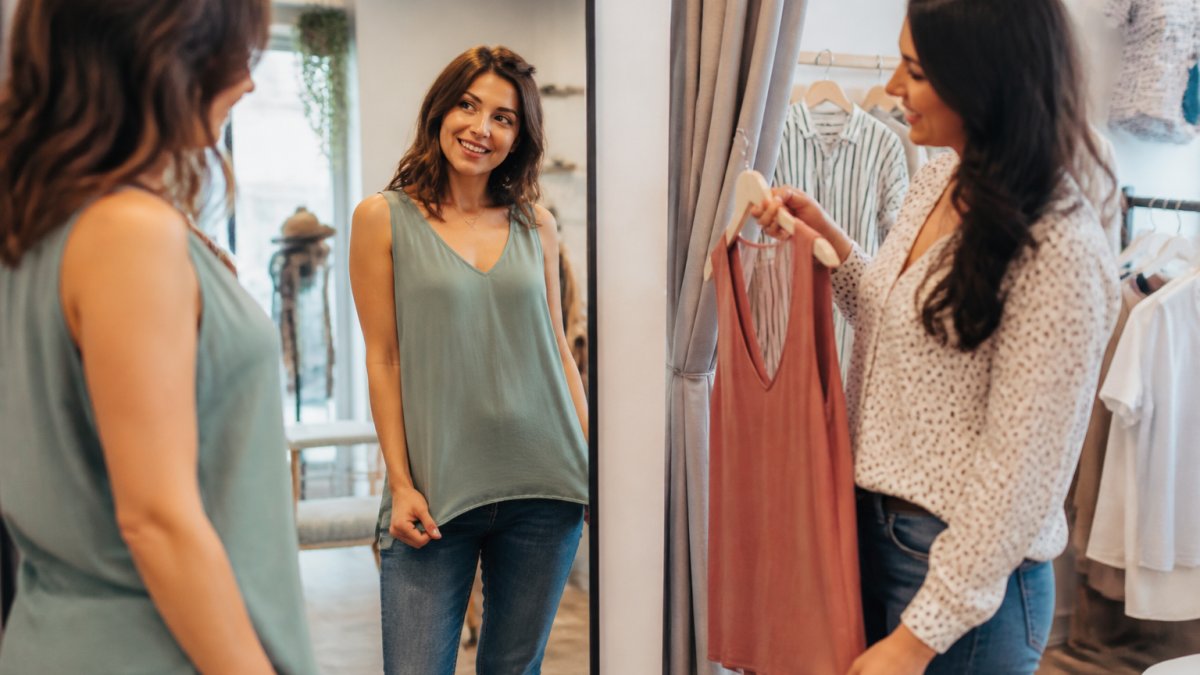
Try Before You Buy, No Return Label Needed
Fitting rooms eliminate guesswork. You see how a garment hangs, whether the color works in daylight, and whether the length suits you.
The trade-off is real: you can only try what the store stocks in your size that day. A boutique with a narrow size run can't match an online retailer that ships three sizes and takes two back.
Styling Help and Real Conversation
A good boutique staff member learns your taste in one visit. They'll tell you what to pair with a piece and, just as usefully, what to skip.
A common pattern is that a stylist saves a customer from a purchase that would have been returned anyway. That's value you can feel even when the sticker price is higher than a marketplace listing.
Money That Stays in the Community
Spending at an independent retailer keeps dollars circulating locally, supports local jobs, and funds community events that make a town worth living in.
Be careful with the claim, though. A boutique that imports everything still sends most of its product cost elsewhere. The honest version is that local ownership shifts more of each dollar toward local wages, rent, and taxes than a remote warehouse does.
Immediate Access and No Shipping Wait
You take it home today. No delivery time, no lost packages, no tracking refresh. The inventory is already in the building, so fulfillment is a bag and a walk to the car.
This matters most when timing is tight: a wedding this weekend, a interview tomorrow, a gift you forgot. Online retail can't compress a shipping window, and expedited shipping is a cost you pay for a problem the boutique never had.
You Can Inspect Product Quality
Stitching, fabric weight, hardware: all visible in person. That's how you avoid fast fashion disappointment. Run a seam between your fingers, check whether the lining is attached or loose, and look at how the buttons are anchored.
The limit is that inspection tells you about construction, not longevity. A well-sewn garment in a delicate fabric can still wear out fast, so ask staff how a piece has held up for other customers.
Trust and Loyalty Build Both Ways
Relationships with shop owners turn into honest recommendations and early access to new arrivals.
That loyalty cuts both ways. A boutique that earns your trust also earns the right to tell you when something isn't worth buying, and the stores that do that tend to keep customers longer than the ones that don't.
Curated Products Beat Endless Scroll
A boutique has already filtered the noise. Curated products and unique products save you time and reduce decision fatigue.
This is the boutique-specific advantage most local-shopping articles skip. A boutique's value is the taste behind the selection, including limited-run pieces you won't see on everyone else. If you want the widest possible selection, online wins.
How to Shop Local on a Budget Without Settling
Budget shopping at a boutique comes down to cost-per-wear, not sticker price. Divide the price by the number of times you expect to wear the piece. A $49 Kalina Peppercorn Top worn once a week for a season lands under $4 a wear.
That doesn't mean boutiques are always the budget answer. It means the comparison has to be run on the same basis, and most shoppers never run it.
Run the Total-Cost Comparison Before You Decide
Online prices look lower because shipping, returns, and time are billed separately or not at all. Add them up before calling one option cheaper:
- Shipping. Many online orders add a shipping charge or require a minimum spend to avoid one. A boutique trip has no shipping line.
- Returns. A return often means a label, a repack, and a wait for the refund. Some retailers charge for return shipping. That cost is real even when it isn't on the receipt.
- Fit risk. If you order two sizes to hedge, you are tying up money and time in a return. A fitting room resolves the question in minutes.
- Alterations. A boutique that offers alteration help folds a cost into the purchase that an online order leaves you to solve separately.
- Time. Count the minutes spent comparing listings, tracking packages, and repacking returns. That time has a value even if you never bill it.
Run those five lines against the sticker price and the gap between online and boutique narrows or disappears, but only if you actually count them.
Stretch One Boutique Trip Into Five Outfits
Build around neutrals, then add one statement piece. A $20 Striped Bill Trucker Hat or the $48 Rose Gold 3 Ring Set changes the look of outfits you already own.

Buy pieces that multiply. A neutral base layer works with everything; an accessory changes the read of an outfit you've worn a dozen times. Before you buy, ask: how many things I already own does this work with?
Use the Store's Free Services as a Budget Tool
Styling help is free at most boutiques and the cheapest way to avoid a bad purchase. Ask staff to build two outfits from one piece before you commit; if they can't, the piece may not be as versatile as it looks. Ask about upcoming sales and whether the store holds pieces for regular customers.
Know When the Boutique Isn't the Budget Answer
Honesty matters here too. If you need a very specific item in a very specific size and price is the only variable, an online search will usually beat a single store's inventory. The boutique budget case works best when you buy fewer, better pieces and use the store's services to make each one earn its cost-per-wear. For a one-time event on the tightest budget, rental or resale may beat both.
Why Unique Clothing Boutiques Beat a Search Bar
Unique clothing boutiques win on curation. A search bar returns thousands of near-identical results. A boutique returns a short list someone with taste already narrowed down, including limited-run pieces you won't see on everyone else.
That curation is the product. It's also why product selection at a good boutique feels different from a marketplace: someone made decisions on your behalf.
The True Cost Comparison: Shipping, Returns, and Time
Total cost isn't the price tag. Add shipping, return postage, the time spent repacking, and the risk of an item that doesn't fit. In-person shopping folds all of that into one trip.
| Cost Factor | Online Order | Local Boutique |
|---|---|---|
| Sticker price | Often lower | Comparable |
| Shipping | Added or minimum-spend | None |
| Returns | Label, repack, wait | Try on first |
| Fit risk | High | Low |
| Time to possession | Days | Immediate |
| Alteration help | Rare | Often available |
The boutique trip usually wins on total cost once returns and time are counted.
How to Find and Evaluate a Local Boutique Near You
Start with what you need, not where you're driving. Decide whether you want clothing, home goods, or accessories, then find a store whose product selection matches. Check whether the boutique carries your size range, offers styling help, and hosts events.
Then visit once without buying. Watch how staff treat browsers. Ask about size availability, disability access, and return policy. That single visit tells you more than any review.
Inclusive Shopping: Sizes, Access, and Budgets That Fit
Inclusive shopping means three things: size availability across body types, physical access for disabled shoppers, and budgets ranging from a $12 Pumpkin Marshmallow Car Diffuser up to a statement dress.

Ask directly. "Do you carry a size 14/16?" is a fair question, and a good store answers it without flinching. If you've had bad experiences at boutiques that didn't carry your size, say so.
Conclusion
Shopping local isn't nostalgia. It's a practical decision about fit, service, total cost, and where your money goes. Swank Boutique offers curated modern styles, personal stylists available upon request, and permanent jewelry services in a welcoming in-store atmosphere. Voted best boutique in Spokane and Coeur d'Alene ID, we'd love to help you find your next favorite piece.
Frequently Asked Questions
Is it actually cheaper to shop online than at a local boutique?
Not always once you add it up. A $40 online top can cost $47 with shipping, and a return can eat another $8 to $12 in label or restocking fees. A boutique price includes the fit check, the styling advice, and the piece going home with you that day. Budget shoppers get further by buying fewer pieces that work with what they already own, which is exactly what a stylist at a local boutique can help you plan.
How do I shop local on a budget without feeling pressured to spend?
Go in with a list of gaps in your closet and a number you will not go over. Ask the staff to show you sale racks and pieces that pair with at least three items you already own. Try things on before buying so you avoid the return cycle. Many boutiques, including Swank Boutique, offer personal styling on request, which means you leave with a small number of pieces that actually get worn instead of a pile of maybes.
Can unique clothing boutiques really fit different body types?
It depends on the store, and it is fair to ask before you drive over. Call ahead and ask what size range they stock and whether they carry sizes beyond a small or medium. A boutique that caters to varied body types will tell you plainly. Trying pieces on in person also beats guessing from a size chart, because you can see how a loose V-neck tank or a structured top actually sits on your frame.
What should I look for when choosing a local boutique?
Look for staff who ask what you are shopping for before pointing at a rack, a size range that includes you, and a return policy you can read in under a minute. Check whether the store hosts events or offers services like permanent jewelry, styling appointments, or in-store markets, since those signal a shop invested in its community. Reviews mentioning helpful, knowledgeable staff are a better sign than pretty photos.
The hardest part of switching to local shopping is knowing where to start. Swank Boutique makes it easy with curated statement pieces, knowledgeable staff who actually help, and a welcoming atmosphere built for every body type and budget. Browse our latest collection or stop in to see it in person.